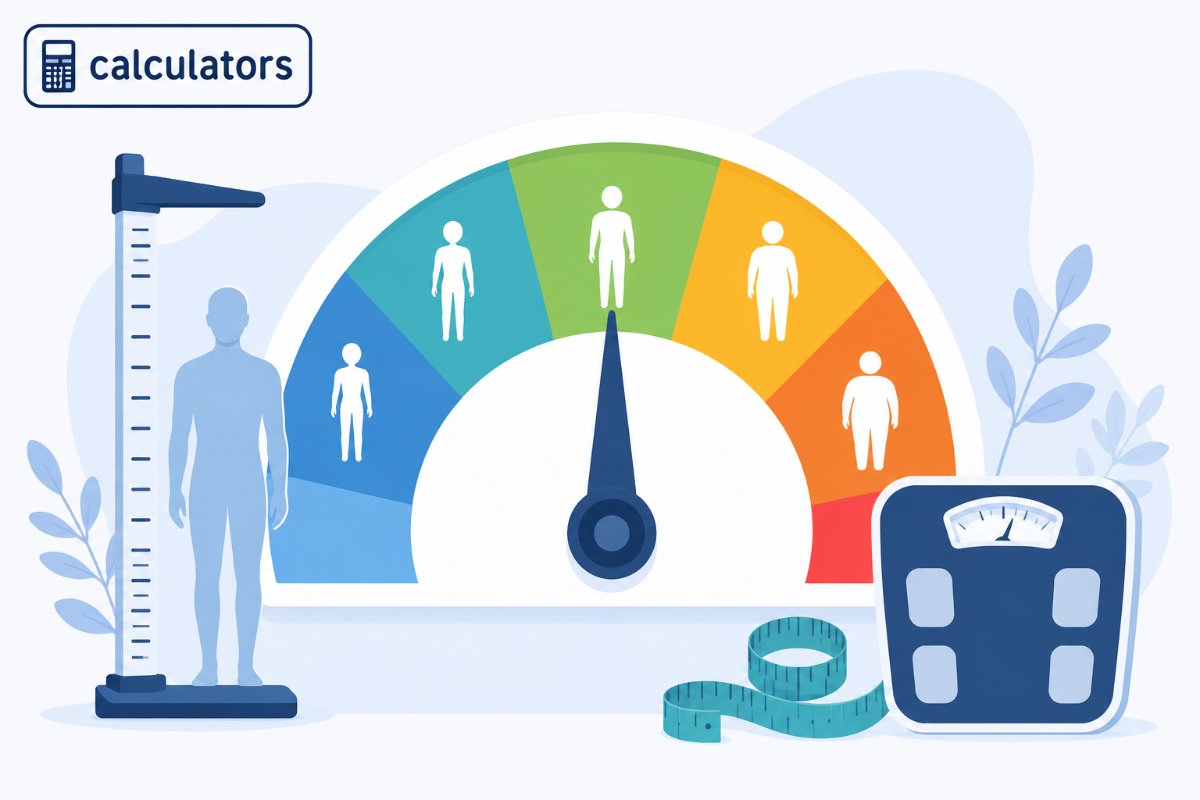
BMI Calculator: What Your Body Mass Index Really Means (Free Tool)
What Is BMI (Body Mass Index)?
Body Mass Index (BMI) is a simple screening number that estimates whether your weight is in a healthy range for your height. It's used worldwide by doctors and health organizations as a quick, low-cost first check, not a diagnosis, but a starting point for a conversation about health.
> Quick definition (snippet-ready): BMI (body mass index) is a measure of weight relative to height, calculated as weight in kilograms divided by height in meters squared. It's a screening tool used to categorize underweight, healthy weight, overweight, and obesity.
The key word is screening. BMI gives useful population-level insight and a handy personal benchmark, but it's one piece of a bigger picture. Find your number with the free BMI calculator on calculator.talcart.com, then read on to understand it properly.
The BMI Formula
Metric:
BMI = weight (kg) / [height (m)]²
Imperial:
BMI = [weight (lb) / height (in)²] × 703
Symbol | Meaning | Example |
Weight | Body weight | 70 kg (154 lb) |
Height | Standing height | 1.75 m (69 in) |
BMI | Result | 22.9 |
How to Calculate BMI: Step-by-Step Example
Say you weigh 70 kg and are 1.75 m tall.
Step 1 — Square your height: 1.75 × 1.75 = 3.0625.
Step 2 — Divide weight by that: 70 ÷ 3.0625 = 22.9.
Step 3 — Read the category: a BMI of 22.9 falls in the healthy weight range. The BMI calculator does this in both metric and imperial instantly.
BMI Categories Chart (WHO Standard for Adults)
> Snippet-ready: For adults, a BMI below 18.5 is underweight, 18.5–24.9 is a healthy weight, 25.0–29.9 is overweight, and 30.0 or above is obesity.
BMI range | Category |
Below 18.5 | Underweight |
18.5 – 24.9 | Healthy weight |
25.0 – 29.9 | Overweight |
30.0 – 34.9 | Obesity (Class I) |
35.0 – 39.9 | Obesity (Class II) |
40.0 and above | Obesity (Class III) |
These categories come from the World Health Organization and are used by the CDC and clinicians as a general adult guide.
Why BMI Doesn't Tell Your Whole Story
This is where most BMI pages fall short. BMI is useful, but it has real limitations, and knowing them prevents needless worry:
• It doesn't distinguish muscle from fat. Muscular athletes can have a "high" BMI while being very healthy.
• It ignores fat distribution. Where you carry fat (especially around the waist) matters for health risk.
• It varies by age, sex, and ethnicity. The same BMI can mean different things across populations; some groups face higher risk at lower BMIs.
• It's not designed for children, pregnant people, or the very elderly in the same way, those use different references.
> Snippet-ready: BMI is a screening tool, not a diagnosis. It doesn't measure body fat directly or distinguish muscle from fat, so it should be considered alongside other measures like waist circumference and a doctor's assessment.
Better Together: BMI + Waist + Body Fat
For a fuller picture, pair BMI with:
• Waist circumference, a strong indicator of health risk (carrying fat around the abdomen matters most).
• Waist-to-height ratio, keeping your waist under half your height is a simple, useful guide.
• Body fat percentage, measured via calipers, smart scales, or clinical methods.
Together, these give context BMI alone can't.
What to Do With Your BMI Number
A BMI outside the healthy range is information, not a verdict. Sensible, sustainable next steps:
1. Talk to a healthcare professional for a personalized assessment, especially before big changes.
2. Focus on habits, not just the number, balanced nutrition, regular movement, sleep, and stress management.
3. Track trends over time, direction matters more than a single reading.
4. Understand your energy needs. Knowing your maintenance calories helps; estimate them with the calorie calculator and your BMR.
Healthy change is gradual and supportive, crash approaches tend to backfire.
16. How to Use the Talcart BMI Calculator
5. Open the BMI calculator.
6. Choose metric or imperial units.
7. Enter your height and weight.
8. Instantly see your BMI and category, then use the context above to interpret it.
17. Key Takeaways
• BMI = weight (kg) ÷ height (m)², a quick screening number.
• For adults, 18.5–24.9 is the healthy range.
• BMI doesn't measure body fat or distinguish muscle, read it alongside waist size and a professional's input.
• Treat your number as a starting point, focus on sustainable habits and trends.
FAQ
What is BMI? BMI (body mass index) is a screening measure of weight relative to height, used to categorize underweight, healthy weight, overweight, and obesity.
How do I calculate my BMI? Divide your weight in kilograms by your height in meters squared. In imperial units, divide weight in pounds by height in inches squared and multiply by 703.
What is a healthy BMI? For adults, a BMI between 18.5 and 24.9 is generally considered a healthy weight, according to the World Health Organization.
What BMI is overweight? A BMI of 25.0 to 29.9 is classified as overweight for adults.
What BMI is considered obese? A BMI of 30.0 or higher is classified as obesity, with further subdivisions at 35 and 40.
Is BMI accurate? BMI is a useful screening tool but not a diagnosis. It doesn't measure body fat directly or distinguish muscle from fat, so it should be interpreted with other measures.
Does BMI account for muscle? No. Very muscular people can have a high BMI despite low body fat, which is a key limitation of the measure.
Is BMI different for men and women? The standard adult BMI formula and categories are the same for men and women, though body composition differs. Body fat percentage differs more meaningfully by sex.
What is a good BMI for my age? Standard adult categories apply across adulthood, but interpretation can shift for older adults. A healthcare professional can advise on what's appropriate for you.
Is BMI accurate for athletes? Often not. Athletes with high muscle mass may register as overweight by BMI while being very healthy, so other measures are better for them.
How can I lower my BMI? Through sustainable habits, balanced nutrition, regular physical activity, adequate sleep, and professional guidance. Gradual change is safer and more lasting.
Does BMI measure body fat? No, it estimates weight status relative to height. Body fat percentage and waist measurements assess fat more directly.
Is BMI used for children? Children and teens use age- and sex-specific BMI percentiles rather than the adult categories.
Health disclaimer: This content is for general informational purposes only and is not a substitute for professional medical advice, diagnosis, or treatment. Always consult a qualified healthcare provider with questions about your health.
Reviews
Loading…