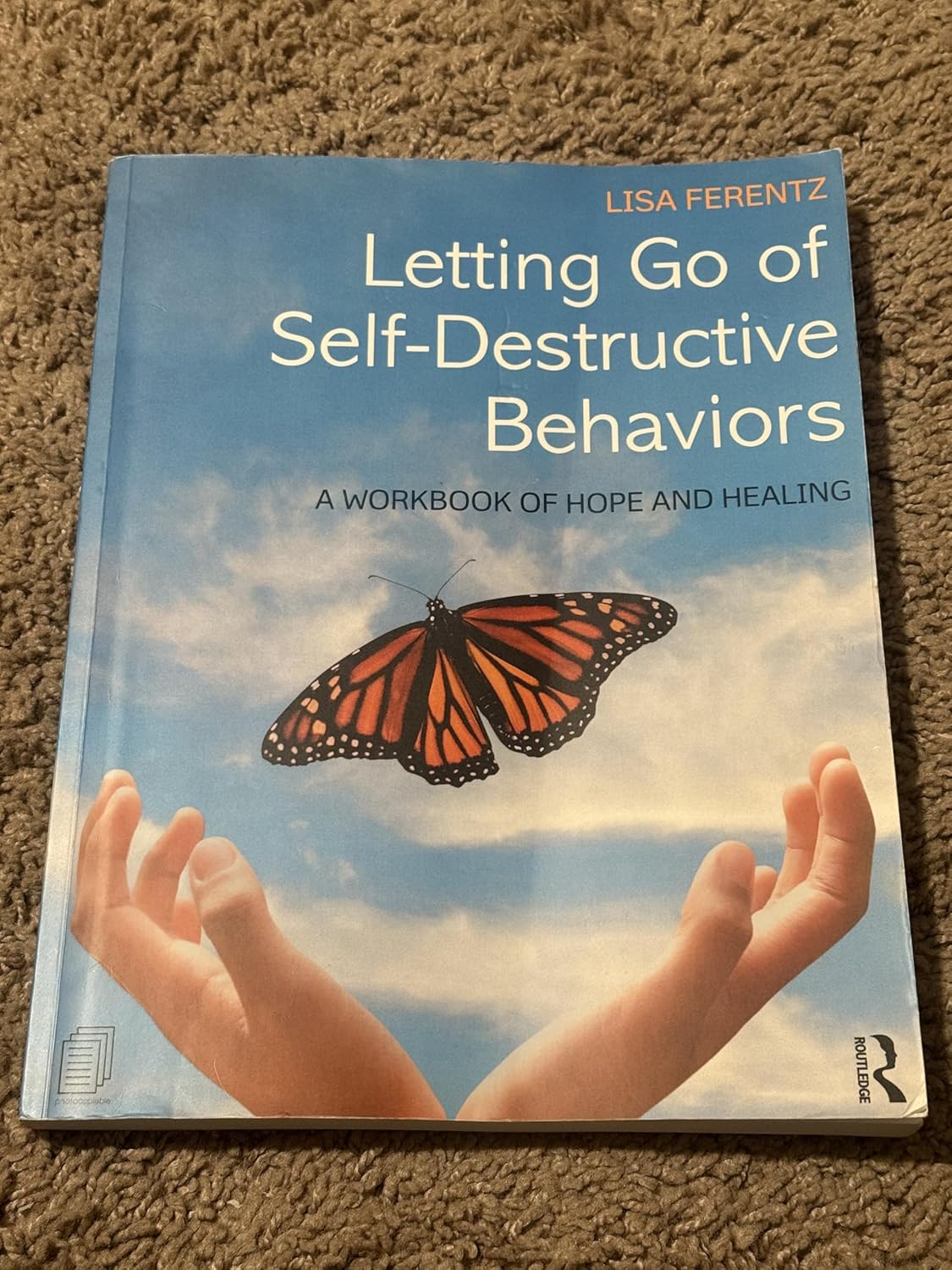
Letting Go of Self-Destructive Behaviors: A Healing Workbook
Letting Go of Self-Destructive Behaviors: A Compassionate Workbook for Lasting Healing
By the editorial team · Reading time: 8 minutes
"You cannot shame, fight, or distract yourself out of a self-destructive behavior. But you can understand it, listen to it, and gently let it go."
If you've ever struggled with an eating disorder, an addiction, or any form of self-harm — or if you love someone who has — you already know one painful truth: willpower is not the answer. Neither is shame. Neither is being told to "just stop."
What actually helps is something far quieter, and far more powerful: a structured, self-compassionate process that teaches you to work with your most painful patterns, instead of against them.
That is exactly what Lisa Ferentz's acclaimed workbook Letting Go of Self-Destructive Behaviors: A Workbook of Hope and Healing offers — and why therapists, survivors, and self-help readers around the world keep returning to it.
In this article, we'll walk you through what makes this workbook different, who it's for, the kinds of exercises inside, and how to use it whether you're working alone, with a therapist, or as a clinician supporting clients.
Why "Letting Go of Self-Destructive Behaviors" Is Different From Most Self-Help Books
Most books on self-harm, addiction, and disordered eating take one of two approaches: they either pathologize the behavior or push readers to "fight" it. Both approaches tend to deepen shame — and shame is the engine that keeps self-destructive cycles running.
Lisa Ferentz, a licensed clinical social worker and internationally recognized trauma specialist, takes a radically different path. Her workbook is built on a single, life-changing premise:
Self-destructive behaviors are not the enemy. They are misguided survival strategies that once made sense — and they can be gently released when the underlying needs are finally met.
This strengths-based, trauma-informed approach doesn't just feel kinder. It works because it reduces internal conflict, instills genuine hope, and gives readers a clear, structured path forward.
Who This Workbook Is For
The workbook is designed for two overlapping audiences:
1. Adolescents and adults healing from self-destructive behaviors
If you are quietly struggling with any of the following, this workbook was written for you:
Eating disorders (restriction, bingeing, purging, compulsive food behaviors)
Substance use and process addictions
Any form of self-mutilation or self-injury
Compulsive behaviors driven by overwhelming emotions
Flashbacks, anxiety, and the lingering imprint of trauma
You don't need to have a diagnosis. You don't need to have "hit bottom." You only need to be ready — even partially — to understand yourself with more compassion.
2. Clinicians, therapists, and helping professionals
The workbook also functions as a companion resource to Lisa Ferentz's clinical text Treating Self-Destructive Behaviors in Trauma Survivors (2nd ed.). This means therapists and clients can approach the work from the same strengths-based framework, using shared language and aligned exercises — which deepens trust and accelerates progress.
Exercises can be used as:
Homework assignments between sessions
In-session prompts to spark insight
Long-term self-paced healing practices
What's Inside: The Healing Toolkit
The workbook is structured around a powerful collection of evidence-informed, creative, and embodied techniques. Each exercise is designed to be approachable, never overwhelming, and adaptable to where you are today.
Journaling Exercises
Guided writing prompts help you understand the function of your behaviors, identify triggers, and re-author the inner narrative that keeps you stuck.
Drawing & Collaging Prompts
Creative expression bypasses the inner critic, allowing painful emotions to be processed in ways that words alone cannot reach — a particularly powerful tool for trauma survivors.
Guided Imagery & Visualizations
Gentle, body-based practices that calm the nervous system and create internal experiences of safety, often missing in early life.
Behavioral Techniques That Actually Work
Practical, repeatable tools to:
Calm the body when activation rises
Contain overwhelming emotions before they spill into self-harm
Manage negative and distorted thoughts with compassion, not combat
Re-ground after flashbacks so the past stops hijacking the present
Decrease vulnerability through assertiveness and communication skills
Access inner wisdom — the part of you that has always known the way
The Heart of the Approach: Compassion Over Combat
The single most transformative idea in this workbook is also its simplest:
You don't heal self-destructive behaviors by fighting them. You heal them by listening to what they were trying to do for you.
Anorexia may have been a desperate attempt to feel in control. Cutting may have been the only way to externalize unbearable inner pain. Substance use may have been the most effective short-term anesthetic available. None of these strategies are sustainable — but all of them, at one point, made sense.
When you stop attacking yourself and start understanding yourself, the behaviors loosen their grip. Not overnight. Not magically. But meaningfully, and lastingly.
How to Get the Most From the Workbook
Whether you're using the workbook on your own or alongside a therapist, a few practices will significantly deepen the results.
1. Go slow on purpose
This isn't a productivity book. Move at the pace your nervous system can tolerate. One prompt a week is enough.
2. Find a compassionate witness
Healing happens in connection. If you can, share your work with a therapist, a peer support group, or a trusted friend who has done their own work.
3. Combine workbook and therapy
For clinicians and clients using Treating Self-Destructive Behaviors in Trauma Survivors (2nd ed.) alongside this workbook, you'll experience the unique power of working from a shared, strengths-based framework. Insights become aligned, sessions become more efficient, and trust grows faster.
4. Notice progress in small wins
Healing is rarely loud. Look for: an extra hour between urge and action, a softer inner voice, a moment of unexpected self-kindness. These are not small. They are the work.
Why Therapists Recommend This Workbook
Mental health professionals who treat trauma, eating disorders, and addiction consistently highlight three reasons this workbook stands out:
It is trauma-informed at every step, never re-traumatizing readers with confrontational language.
It bridges the gap between sessions, giving clients meaningful, structured work to take home.
It restores agency, returning the locus of healing to the person who needs it most: the survivor themselves.
For clinicians, this workbook is more than a homework book. It is an extension of the therapeutic relationship.
Frequently Asked Questions
Is this workbook a replacement for therapy?
No. It is a powerful complement to professional support — not a substitute. If you are in crisis or actively engaging in dangerous behaviors, please reach out to a qualified mental health professional first.
Do I need to have read the clinical book to use this workbook?
Not at all. The workbook stands on its own and is written in accessible, supportive language.
Will doing the exercises bring up difficult emotions?
Sometimes, yes. That is part of healing. The workbook is structured to keep you within a tolerable window. If anything feels overwhelming, pause and seek support.
Can teenagers use the workbook?
The workbook is designed for both adolescents and adults. For younger teens, parental or therapeutic guidance is recommended.
Final Thoughts: A Quiet Permission to Heal
If you've spent years at war with yourself, this workbook offers something rare: permission to stop fighting and start listening. Permission to be a beginner. Permission to heal at your own pace, with curiosity instead of cruelty.
The behaviors you've used to survive are not who you are. They are what you reached for in moments when you needed something — anything — to hold the pain. With the right tools, the right framework, and the right support, you can put them down.
This workbook is one of those tools. Pick it up. Pick yourself up with it.
Ready to Begin Your Healing Journey?
Get Letting Go of Self-Destructive Behaviors by Lisa Ferentz →
Reviews
Loading…